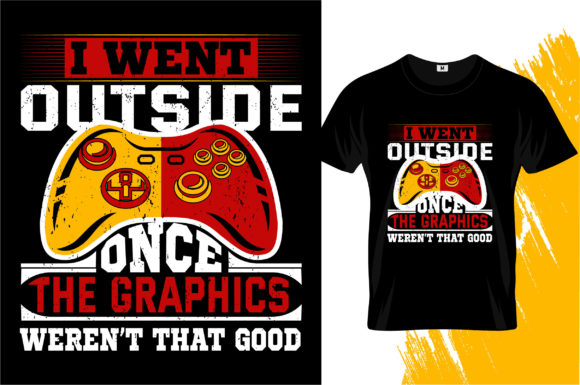
Reviewing the "I Went Outside" Tee Design
As a designer who spends more time staring at digitized paths than actual sunlight, I have developed a keen eye for what translates well from screen to needle. Recently, I evaluated a specific asset labeled I Went Outside Once the ... T-shirt. The premise is simple, rooted in that familiar gamer humor: “I went outside once, the graphics weren’t that good.” It is a witty nod to the digital native experience, but my job is not to judge the joke. My job is to determine if this graphic holds up when subjected to the mechanical realities of embroidery.
The product description lists this as a GAMING t-shirt design and provides EPS, SVG, and PNG files at 4500×5400 pixels with 300 dpi transparency. For those of us in the craft business, this mix of vector and raster formats raises immediate questions about workflow. Let us break down how this design performs in real-world applications, from custom apparel to small shop merchandise.
First Impressions and Visual Personality
The mood of this piece is casual, self-deprecating, and instantly recognizable to a specific demographic. Visually, it relies heavily on typography. In the context of T-Shirt Designs, text-heavy graphics are common, but they are notoriously tricky to embroider. The charm lies in the relatability, making it an ideal candidate for personalized gifts or boutique branding that targets hobbyists and creative entrepreneurs.
However, the provided files are primarily print-oriented. The PNG is high resolution, which is excellent for printable mockups and digital product previews. But for a machine embroidery design, we need to consider how these letters convert to stitches. If you are using the SVG or EPS to auto-digitize, you must be cautious. Thin serifs or tight kerning can become a nightmare of thread breaks and bird nests if not manually adjusted for stitch density.
Real-World Application: The Sweatshirt Test
To test the viability of this asset, I imagined applying it to a mid-weight cotton sweatshirt. This is a popular item for Etsy sellers and small business owners during the cooler months. The humor fits the cozy, indoor-centric vibe of a hoodie or crewneck perfectly.
When stitching this onto a sweatshirt, the fabric texture plays a significant role. The looped surface of fleece or French terry can swallow small details. If the lettering in the “I Went Outside Once the ... T-shirt” design is too fine, the fill stitch may not cover the fabric background evenly, leading to a patchy appearance. I recommend using a cut-away stabilizer to support the weight of the thread, ensuring the finished product maintains its shape after washing.
For a cleaner look, consider converting the text into a satin stitch border with a minimal fill, or even an applique design where the letters are cut from contrasting fabric and stitched down. This reduces bulk and enhances readability, which is crucial for customer trust and visual appeal.
Navigating Fabric and Hoop Constraints
One of the biggest challenges with this type of graphic is scale. The phrase is long. Fitting it into a standard 4x4 or 5x7 hoop size requires careful layout planning. If you shrink the design too much to fit a small hoop, the stitch density becomes too high, resulting in a stiff, cardboard-like feel on the garment. This is particularly problematic for baby embroidery or delicate fabrics where comfort is paramount.
Curved surfaces, such as caps or hats, present another hurdle. Stitching a long horizontal line of text on a curved brim requires precise hooping and often a specialized cap frame. The tension must be balanced perfectly to prevent puckering. If you are new to commercial embroidery, I advise testing this design on scrap fabric first. Check how the thread colors contrast against dark fabric. White thread on black cotton is classic, but ensure your digitizing software has compensated for pull compensation, or the letters will look distorted.
Commercial Viability for Craft Businesses
For the Etsy seller or handmade shop owner, this design offers strong potential for niche marketing. It appeals to gamers, introverts, and tech enthusiasts. As a digital embroidery file, it serves as a versatile asset for creating various products: tote bag designs, aprons, pillow covers, and even tea towels. The key to success here is presentation.
Use the provided transparent PNG to create high-quality printable mockups for your online listings. Show the design on different backgrounds to help buyers visualize the final product. However, always clarify the licensing terms. The description states you can use the file for products to be printed, but it does not explicitly detail rights for digital resale or mass commercial embroidery production. Always confirm licensing before selling finished items or digital products to avoid legal issues.
Technical Considerations and Best Practices
Before committing to a full production run, keep these practical notes in mind:
- Check Stitch Density: If you are digitizing this yourself from the SVG, ensure the fill stitch is not too dense. Over-digitizing leads to thread breaks and fabric distortion.
- Thread Color Contrast: Test the design in black and white mockups first. High contrast ensures the message is readable from a distance.
- Stabilizer Selection: Use a appropriate stabilizer for the fabric type. Tear-away for stable woven fabrics like towels; cut-away for stretchy knits like t-shirts and sweatshirts.
- Small Details: Inspect tiny lettering closely. If any part of the text is thinner than 2mm, consider widening it or switching to a running stitch outline to maintain clarity.
- Fabric Texture: Avoid using this detailed design on highly textured fabrics like heavy wool or loose-weave linen unless you use a topping film to keep the stitches on the surface.
Final Verdict on the Design Asset
The I Went Outside Once the ... T-shirt concept is strong. It taps into a cultural sentiment that resonates with a wide audience. As a graphic, it is clean and effective. However, transitioning it from a print-ready PNG to a stitched reality requires technical diligence. It is not a plug-and-play solution for every machine embroidery setup without some preparation.
For designers willing to put in the work to adjust stitch types and densities, this asset can elevate a standard piece of custom apparel into a standout item. It adds personality to holiday embroidery projects, wedding gifts for the groomsmen who prefer gaming to dancing, or everyday wear for the digital nomad. Just remember: the quality of the finished product depends less on the original graphic and more on how well you adapt it to the needle. Treat it as a starting point, not a final destination, and your customers will appreciate the professional finish.